

You must log in or # to comment.
Is this the most efficient way to store 17 houses?
So much more room for delicious maple syrup.
Waffle.
Removed by mod
Sweety.
Optional sweaty is the perfect amount of perspiration to have upon one’s person.
*Optimal
Optional sweater is when you choose to perspire
*sweaty
Optional Sweater is when you have the exact correct sweater for the occasion
*sweaty
Opinionated sweater is when somebody offers to refund the sweater they gave you as a gift
The misuse of the word is intentional and part of the joke. An artifact from reddit.
Optimal. Optical sweaty is the choice of whether or not one would like to be perspiring.
Optional. Optical sweaty is when you are so sad that your eyes start to vacuum tears.
Optimus. Optical sweaty is when you are more than meets the eye.
That’s having a thin layer of liquid perspiration that’s constantly boiling off and evaporating
This is what I immediately thought of. I actually thought it was an AI construction, as a joke.
Reminds me of this place:

(I remember just walking to school and it felt weird walking on a “slanted” street lol)
Old train tracks?
Sort of… its a subway… built over ground… right over the street… (colored lines are the subway)


Omg this is so nostalgic… just looking at the streetviews…
This was basically what “my world” looked like when my family first immigrated to the US…
At some point that was probably above ground. The reason many cities have these section not aligned is because they were aligned to the train tracks, not to a compass.
So you’re saying that they were on the ground, but then they took it apart and built the little “bridge” thing so now it’s above the street?
There was most likely an older train line there. Then it was ripped up and rebuilt on the bridge for local train traffic.
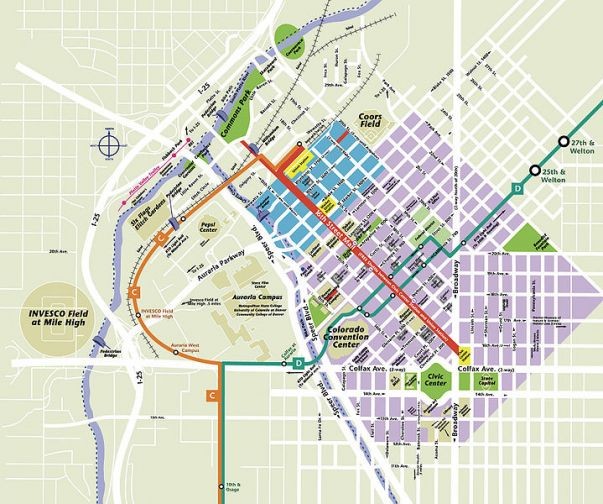
Downtown Denver:
This is the part in Sim City where I restart.
Aw, now I miss Sim City 2000
Sim City 4 is the best version of the Sim City games, and is 75% off on GOG right now, $5 / £4.
Cities Skylines 1 is the best modern city builder, 3D and a lot of fun plus well designed. But only really worth it when it’s on sale; lots of DLC and overpriced as a package when not on sale. Avoid Cities Skylines 2 - it’s just not fun and hasn’t been fixed - maybe they will one day fix but I doubt it 2.5 years in…
Imagine what Cities Skylines could have been without Paradox’s super monetization plan
Lol I was just thinking “this sounds like Stellaris” then you say it’s Paradox
Pssst…just pirate it with all DLC.
The original developer has literally been pulled off of Cities Skylines 2. Maybe the little developer that Paradox put on it to crank out DLCs will do a good job and fix it, but I doubt it.
And don’t forget the Network Addon Mod for Sim City 4. Improves traffic simulation and adds a whole bunch of new sorts of transportation stuff. It’s really the expansion pack Sim City 4 never had.
Cities and Skylines isn’t too far off from that sim city 2000 vibe, if you need a fix
The GoG version of SimCity 2000 runs fine in wine. The originals, not so much.
https://appdb.winehq.org/objectManager.php?sClass=application&iId=504
I’ll check that out! Thanks for the rec!
Just avoid cities skylines 2. It’s just a cash grab
IMO the painful thing about it is that it was clearly just too ambitious of a simulation and they made it unmanageable, so then they backpedaled and made it too easy by having a lot of the systems automatically balance themselves (electricity from neighboring cities, for instance)
Yeah, Cities Skylines had traffic that was reactive to design. I’ve played some CS2, and while some things are improved (like lane connection), it feels like the traffic is just simulated sprites based on a traffic congestion variable for the area or something. Upgrading roads sometimes helps, but providing better routes doesn’t always help like you would expect. It feels very disconnected and rewards linear progression rather than skillful or smart gameplay. I still play CS1 and I check in on CS2 once or twice a year to see if it still sucks. I did enjoy the bike patch to some degree, but the gameplay in general just seems artificial and lame. CS1 may be old with mediocre graphics, but it’s still a 9/10 game in my opinion and you can buy in cheap nowadays to get caught up on DLCs and such. I have nearly everything except the radio packs. The menus are inconsistent and the way they organize things doesn’t always make intuitive sense. I think they would be better off recreating CS1 on a more modern engine than trying to reinvent a masterpiece. For me CS2 was the biggest disappointment of the gaming decade. With that said, lots of games sucked on release. Fallout 76 grew into it’s shoes, Stalker 2 was panned at release and is now much more highly regarded. I hope CS2 finds its way back into sync with the community, but I’ll be enjoying CS1 and other games until that happens. Thankfully MS hasn’t completely destroyed Minecraft. I practice city design on a much smaller scale on there (more “place making”, less traffic management, more roleplay, less mechanics).
At least with places like Denver and other western cities it’s pretty straightforward how it happened - everything built along the river. Access to the river was key.
Being a boom/bust city means that a much later boom they adjusted.
Then even older cities (think Boston) grew before any opportunity at planning could happen.
Denver was two cities - Auraria (correction from Aurora thanks to @negativenull) and Denver. One was built to align with the river, the other with compass points and then they grew big enough to smush into each other and neither was willing to concede to the other.
Also Denver’s namesake, a Kansas politician, never even visited. It was a failed attempt to lure him here.
(minor correction: Auraria was the name:
https://www.uncovercolorado.com/auraria-colorado-history/ )OMG thank you - brain fart on my part!
My favorite is how 15th St just boings off of Colfax (15th ave)
I can’t see the pic in your comment, but I am gonna guess Broadway and Lincoln between 19th and 20th?
Interestingly enough, Denver has 3 main grids:
The range and township grid as the typical NS/EW grid, the Araria grid by DU which is largely built over, and the downtown grid, the last two of which are aligned to Cherry Creek and the Platte River, though I’m not certain which one to which waterway. If it wasn’t for one-ways, that area would be screwed up beyond belief. As it stands, it just looks a little odd and everyone needs to try to pick their lanes in advance. :D
I just uploaded the image in my comment directly, instead of linking an external site. Hopefully you can see it now.
Where is this?
Edit: Found it! Jacksonville Beach, FL
30.280765 N 81.393002 W
Jacksonville Beach, FL
https://www.openstreetmap.org/#map=16%2F30.27980%2F-81.39504
In my experience, many cities old enough in the US. Almost every biggish city where I live has the center of town laying differently than the newer, surrounding areas. There was a time when they oriented things different than how they plan it out now so now the older downtown areas look cock-eyed on a map/satellite image.
Grids were more efficient for pedestrians and unmotorized transport, but the caveat is that motorized transport, especially on large grids, will often be driving faster than is desired among the pedestrian traffic.
Which is why the ethos has changed off of grids to the windy, curvy roads that naturally encourage slower speeds…no straightaways to really build up speeds like you can with a grid.
Most town centers, which have likely existed before the car did in large numbers, are still laid out in a grid…but youll notice as you get farther out, when the neighborhoods started getting built in the post wwii era and the rise of the burbs, are not generally grids.
This is an easier way to eyeball how old a particular neighborhood is…with some caveats and exceptions of course.
A grid is still most efficient, but were trading efficiency for safety which is reasonable…weren’t too many idiots doing 60mph on 35mph city streets like we have today.
A grid is still most efficient
May I introduce you to Magnasanti: No road grid. A map of mostly skyscrapers, libraries, and subway stations. https://youtu.be/NTJQTc-TqpU
“Sims don’t need to travel long distances, because their workplace is just within walking distance. In fact they do not even need to leave their own block. Wherever they go it’s like going to the same place.”
Reverse image search has mixed results… A few say Florida, but the top one says Wyoming. I’d guess the one that says Jacksonville, Florida is most likely.
See my edit, it’s Jacksonville Beach FL
I was thinking maybe an old Spanish Land Grant or something maybe. But, that doesn’t seem to be the case. That block is orientated north, while the surrounding blocks are oriented parallel with the coast, just east (right) of the crop. So then, I thought that maybe it was one weird plat of lot and the city grew around it. Nope. The thing is, you can look up all the plats (thanks to Florida’s sunshine laws) back to the original bureau of land management surveys (thanks to the BLM & labins.org).There aren’t even that many. This neighborhood has been like this from it’s beginning as far as I can tell. Around 1911 the whole town, then called Pablo Beach, was platted. And right there in the middle is this weird block, seemingly by design and without explanation. It was replatted in 1922, keeping the twisted block intact. It’s been residential neighborhood and largely unchanged since then (at least as far as the parcels and streets are concerned).
Here’s another one:

Missoula, MT
Inb4 Hank Green does a video about this.
It’s actually a good story, too. I’m on mobile and not really qualified to tell it, however.
It was a golf course. A sex golf course. For ghosts!
Two lawyers got in a pissing contest on developing the land they owned.
My great-grandfather apparently had a story about it. It involved lots of booze, a prostitute, and a horse. Then again most of his stories had the same theme so the truthfulness of the story is up for debate.
Missoula is a bit odd on a few things. I attended Hellgate elementary - yes that’s the name of the school.
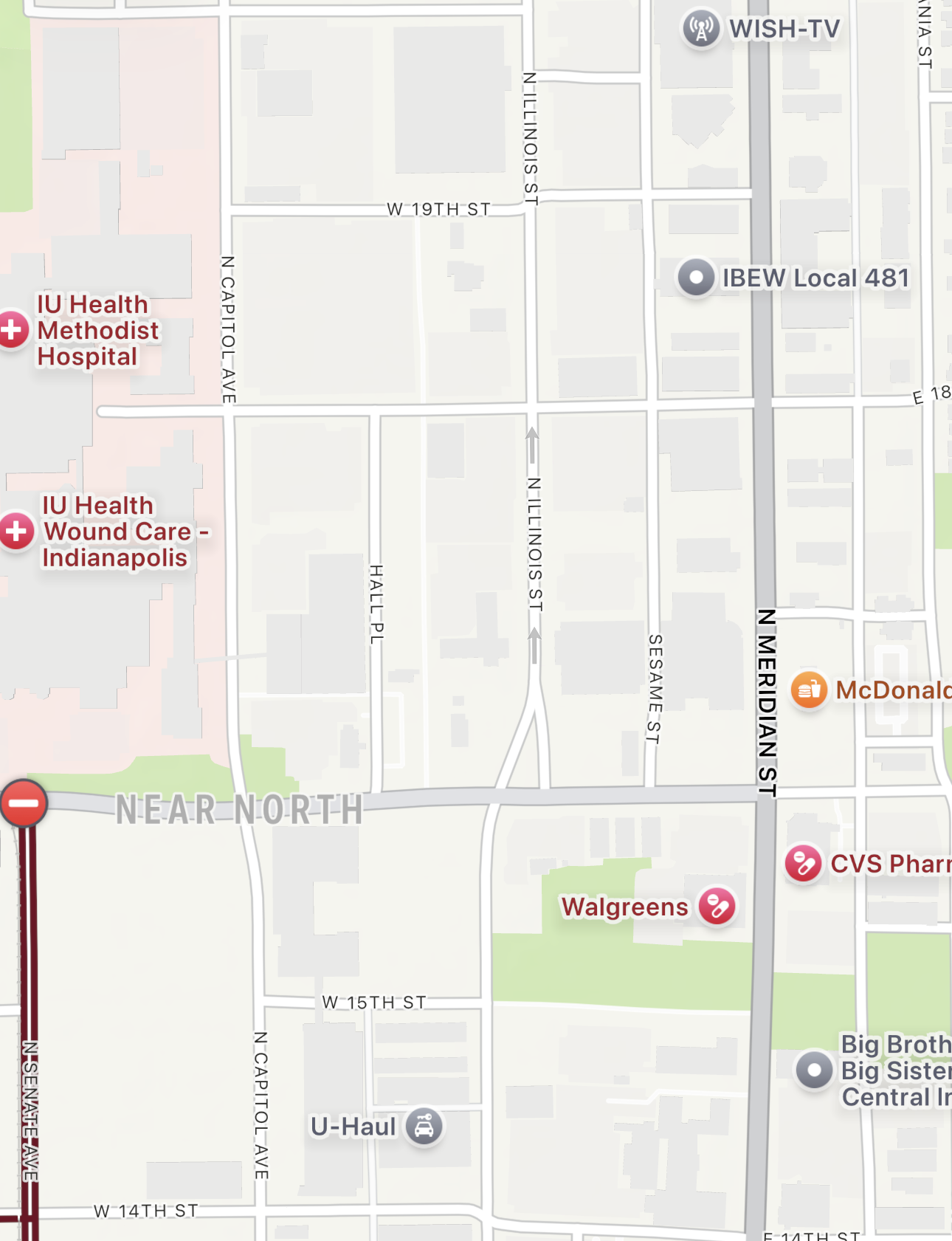
Indianapolis built the central mile square of streets aligned with magnetic north, but then the rest of downtown aligned with true north. It’s almost aligned, which causes problems at that border.
I’ve lived here for years and never realized that’s why everything in the center looked slightly off center. Thanks!
I lived downtown for a couple of years and drove north on Illinois street to get to work. This swerve as it crossed 16th street and the corresponding confusion to drivers just about killed me a few times.


actually tho, flowing windy streets and roads are so much better.
- more interesting
- less of a drag track
- not depressing stroadie strips
- keeps people on main roads rather than just trying to cut through residential streets
- naturally manages driver attention
Less intersections where cars can crash into pedestrians or other vehicles
I wish, just check Atlanta - winding stroads as far as the eye can see
Yes to all, especially the driver attention one.
I have two options when driving to work. One is shorter and takes straight level roads through the newest part of town.
The other way is slightly longer but it’s a twisty hilly road through the countryside.
I take the longer route every single day unless it is actively snowing or something. And now that hybrid WFH is a common thing, I don’t often drive in the snow.
I mean, you can organise grids to be more or less stroady, and if you have too much of this going - like you have a medieval street plan - you can get the opposite thing where cars are forced through areas only suited to pedestrians, and everyone has to flatten themselves against building walls to make room.
but the point is that by not organizing it into a grid at the local level, drivers aren’t going to cut through a low speed local street, keeping those streets less polluted and safer.
I mean, there’s more options than just tree or grid, and if it’s not strictly a tree the fastest route from A to B could be something small again. And of course trees have their own issues, like what happens if you need to get from one leaf to another that’s nearby, but only “as the crow flies”.
That example about having to move aside for a car going through a narrow European street is something I’ve actually experienced. Maybe it’s just my Canadian brain but it feels unsafe.
Boston looks much easier to navigate though. Much clearer road hierarchy, meaning better flowing traffic, and less traffic near houses and shops.
Disclaimer: above statement is based on the image posted here, not on knowledge on the actual situation.
Where I’m from cities like Boston are the norm. When I was in a grid city for the first time, I immediately got lost on the roads because everything just looks the same.
On the other hand, Americans seem to have a more intuitive sense of the cardinal directions than Europeans do from my experience. Which makes sense if you’re used to roads aligned with them.
As someone who drives through Boston often: it’s the worst-planned city I’ve ever seen. I am fairly convinced that the underground tunnel system is actually creating an eldritch sigil of chaos (a la Good Omens), and it is not uncommon to encounter a seven-way intersection, where two of those ways are train lines, but aren’t marked, so at night, you can accidentally find yourself on train tracks. It’s like if someone bargained with the Fey to make a city.
I am familiar with Boston, and the 2 times I have driven in nyc it was SIGNIFICANTLY easier to navigate than Boston lol. NYC was at least partially thought out, Boston is what you get when your road planner is a 3 year old toddler who threw a hand full of spaghetti on a map and said theres your streets LOL. Possibly the most annoying city I have had the misfortune of navigating lol.
Yeah, Boston is chaos and it is super easy to get lost. And you’ll have two roads converging and splitting and you gotta just hope you’re in the right place!
Then there’s Pittsburgh. It’s like Boston but when you take a wrong turn you end up on the wrong side of a mighty river or two.
This guy yinzez
Welcome to everywhere else in the world that’s not a fucking grid lol.
This isnt a computer where traces are made in 90 and 45° angles.There weren’t computers when NYC’s grid was laid out either.
And the ancient Romans, and Indus valley people another couple millennia earlier were both fond of grid plans.
They’re considered passe, but there’s real advantage in terms of easy scalability and adaptability to changing land uses.
Well, there were. But back then computers had hair and nails.
Mmm, hot computers. Giggity.
Ugh that grid pattern. Imagine living somewhere so uninspired.
Have you considered maybe it’s easier to navigate and plan a grid pattern? I wouldn’t mind uninspired street names like 1st, 2nd, 3rd St, crossways with N, O, P, Q Ave so you at least know which direction is which. Give me that chess board layout so I don’t need to pull up a map to navigate your city please. Car C1 takes Bar G5
and then 14th SE doesnt connect with 14th NE
thanks portland
My city has a street that changes name 4 times as you go down it.
Are you in Austin? Because Austin has that.
Which part of Koenig/2222/Northland/Allandale/Bullick Hollow/290 do you live on?
Between Burnet and Lamar
Better than Atlanta that names every road Peachtree :)
Japan doesn’t even bother with street names, except the largest ones in big cities. If you want to find a house, they are also not necessarily numbered sequentially. Sometimes the houses in a neighborhood are numbered in the order they were built.
If you want to find a house, you go to the neighborhood map and look there. At least, that’s how it used to be. Now everything is GPS. I was using GPS in a car close to 30 years ago, I wouldn’t be surprised if it was the first place in the world to have consumer GPS, simply because they needed it.
Lexington, KY? They have several that do that.
Sure but you’ll never encounter the magic of a crooked alley snaking its way through a maze of medieval building.
Istanbul blew my naive American mind when I visited
Tunis, Tunisia. The old town was something else.
Not medieval, but, Boston has some good alleys, nooks, and crannies.
Over here in 2026 we have satnav in our cars and on our bikes. We also have a system of road types that actually makes sense and that keeps traffic out of housed areas as much as possible.
You have to understand that there are places in the USA where “city planning” is completely unheard of. They seem to let landowners develop however the fuck they want. They end up with grids of identical houses with little thought of connections to services such as shopping, healthcare, recreation, etc.
Have you considered maybe it’s easier to navigate and plan a grid pattern?
With every corner looking the same?
Only from above. When you’re on foot, grid systems feel plenty variable and lively
Kenosha, WI
Yes! I can get up so much speed on those straight roads! Blow through a few stop signs and I can easily drive all the way through a house!
Easy navigation isn’t relevant in a neighborhood of nothing but houses and play space, roads with curves are incredibly important to slow the flow of traffic
There’s a flipside too though. Straight lines aren’t great for suburbs for the speed reason, but once you reach enough density and the roads get narrow enough, grids make planning easier, and navigating easier for pedestrians. Roundabouts are a nice way to slow traffic through straight roads
Ok? So put straight roads in your cities and high density areas. Neighborhoods of just houses aren’t what you’re describing
There are residential neighborhoods in cities though, where straight roads with roundabouts and other traffic calming makes more sense than a curving a road, for the purposes of lowering driving speeds. Neither is better or worse inherently, we should just tailor solutions to the environment they’re needed in.
Straight roads have little to do with driver speed. It’s how you design the roads. Wide lanes with buildings set back from the road? Higher speeds. That’s why some initiatives put curbs that jut out into the road (not into the lanes of travel) with trees and plants and such, and remove road striping. Combine pedestrians and road traffic on a road that looks more like a parking lot and you get drivers driving slowly. Sounds counter-intuitive, but it works.
Yeah, pedestrians aren’t really a consideration in this kind of town planning.
If they were, they would’ve put in sidewalks. Which they didn’t.
Can’t really have it both ways.
You don’t need curves to slow traffic, there a ton of ways to slow traffic
Not better:

Agreed. Same car dependency grid but from different socioeconomic posh level.
(Actually the density is lower, so as a suburb it’s worse & traveling distances/city area larger.)
What’s this?
A common American suburban development
A “modern” design, the current trend of shitty suburban layout that seems to be the alternative to the grid layout complained about.
Agree, all the roads lead nowhere.
so fucking much better!
But why? Name one reason it’s better besides your personal aesthetic preferences
Edit: I appreciate everyone’s measured responses. Thank you for answering my question, and not escalating my ill-advised knee-jerk comment. I stand corrected :)
Why? It IS about my aesthetic preferences :)
I like when everywhere in a place is different and memorable.
If you like samey grids I have no reason not to respect that, but I wholeheartedly disagree.
No constant traffic near your house (cleaner air, safer streets).
The ability to walk or cycle somewhere without crossing 4-way intersections constantly.
Doesn’t require speed bumps to slow down the dregs of society.
Better than living nowhere!
Lived on a grid the last 15 years and it objectively rules. The “objectively” part is the appreciating property values of the home I just sold, which outpaced those of cul-de-sac homes is my area over that same timeframe. Grid gang 4 lyfe
Are those the two options, grid or cul-de-sac
How about a grid system that changes direction at every single avenue?

Looks like everyone started a new road perpendicular to the shore line, and the mess occurred when the roads got long enough to meet.
Bingo. Allow me to introduce you to the colonial French seigneurial system.
No they’re were designed that way. The names remain the same no matter how many times they turn. The street i live on starts off going west, then south, then south west and back to west again on the other side of town.
Speaking as someone who has been living in towns with rivers for most of my life:
This is the way.
My experience clearly says that you will loose orientation and get confused the moment you go to a district that is not alligned with the riverbank.
Still a better system than Boston, having navigated both MANY times. To call Boston’s streets a “system” is an insult to the very concept of order.
It’s tough to look at, but I bet it’s amazing for traffic calming.
Came here to say the same. This design (or accident) forces north/south traffic to use the arterials on either side of the neighbourhood instead of going through the neighbourhood.

Lol get fucking rotated
Unrelated but, Theres a section of Prince George Canada that all of a sudden does a big U. The story i was told is that back in the day there were two competing railway companies, and one of them bought enough influence that when the city was making roads to the other company, they instead made the roads bend back.

Damn, capitalism is fucked up