

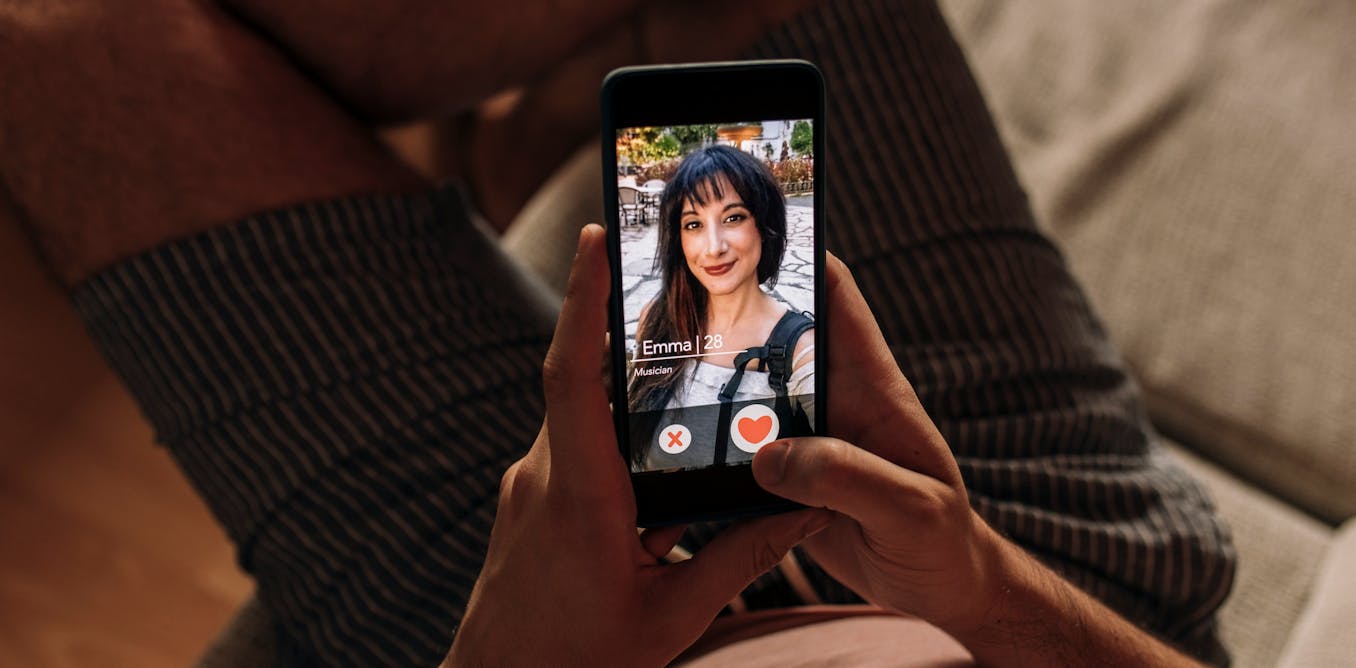
In the weeks leading up to Valentine’s Day, dating apps typically see a spike in new users and activity. More profiles are created, more messages sent, more swipes logged.
Dating platforms market themselves as modern technological solutions to loneliness, right at your fingertips. And yet, for many people, the day meant to celebrate romantic connection feels lonelier than ever.
This, rather than a personal failure or the reality of modern romance, is the outcome of how dating apps are designed and of the economic logic that governs them.
These digital tools aren’t simply interfaces that facilitate connection. The ease and expansiveness of online dating have commodified social bonds, eroded meaningful interactions and created a type of dating throw-away culture, encouraging a sense of disposability and distorting decision-making.
The apps have been very kind to me.
On Tinder, I met my GF from 2017 to 2022. We had a lot in common, had some really great times, but the long-distance thing in the end was too much, so when she suggested opening up the relationship, I went back on the apps, and after an open relationship phase, we decided to shift from a romantic relationship to friendship. We’re still good friends, though - I saw her last Thursday when she was in my city.
During our open phase, I met some lovely people (two on Bumble, one on tinder) who for one reason or another weren’t open to a committed relationship, but there was no harm done - we spent good time together and drifted naturally apart once I started a relationship that turned monogamous. No hard feelings on either side.
On Tinder I also met my current (forever) partner. Amazing, low-conflict relationship. We live together and I’ve kind of stepped into the dad role for her son. We met in December 2021, chatted for three months and then started seeing each other, and soon became exclusive. I get along brilliantly with her parents, as does she with mine. We’re absolutely sure that we’re together for life.
I never felt that the apps were leading me into cheap, disposable relationships. I never had issues of “What if the next perfect person is just one swipe away?”
Glad to hear that you have the positive experience. I wish the outcome was only tied to the user’s mindset or intention of using the app.
Yet another “perk” of capitalism. Profit is what matters boys, not our feelings :)
I feel like we ought to expand that traditional quote about the last fish being caught, the last tree being cut and all: When the last emotion is commodified, you will realise that you can’t buy happiness.
There was a “Golden Age” period of dating apps (that actually coincided much with the same “golden age” of many other services including streaming), where making money wasn’t the goal, and the services actually served their official goal - pairing up people.
Problem is, any kind of dating app is self-detrimental for revenue, because if they serve that official goal, they’re essentially nixing their own customer base. Because what’s the point of a dating app? To find a person you can date, therefore you wouldn’t need a dating app anymore. If it works as advertised, users spend bare minimum time on the platform before achieving their goals and leaving it.
This simply means that a dating platform is only viable in three scenarios:
- the platform itself is an extension of an existing service, meaning it doesn’t have to be financially successful on its own as long as it helps retain users and user-minutes (aka how much time a user spends on the entirety of the service, dating included). See e.g. Facebook’s dating subsection.
- there’s VC funding, the app is in a growth phase, therefore the goals can stay as-is as long as userbase growth can be shown to the investors. Problem is, once the platform reaches critical mass and those investors want their money back, from then on, enshittification ensues.
- the platform is driven not by VC funding or connected services but by a person’s or a group of people’s genuine interest in getting people paired up. There will be ads, there will be some paid features, but it cannot scale and is therefore doomed to fail on the long run (think pre-dating-app forums specialising on dating/partner-finding)
Most dating apps fall into the second category, and in fact if you do just a moment’s research you’ll notice that some 80-90% of the highest traffic (or most known) dating apps are under a single company. Yep, there’s a literal dating apps monopoly going on that snuffs out competition, or buys them up and shuts them down, and so on.
In fact… I’m a mobile app engineer, and I’ve actually ended up applying to a few dating app startups. The one common denominator between these was not that they wanted to do something new, or wanted to engage people differently than the rest… no. It was that all of these companies were specifically made with a niche idea in mind with the sole purpose of creating a minimum viable product that catches the interest of this dating monopoly and buys the company out. Yup. My job would’ve been “make our company sellable”. You can imagine how inspiring that is, especially when there’s no offer of equity on the table…
any kind of dating app is self-detrimental for revenue
It doesn’t have to be. In the US, about 4 million people turn 18 every year. Let’s say you get all of them signed up and all of them optimally paired off. You still have another 4 million new signups next year. Until the world falls off a demographic cliff, you’ve got an evergreen customer population.
That being said, the well is VERY poisoned at this point. The match group is a cancer on our society.
But why limit yourself to the 4 million new customers when you could have 4 million news customers AND potentially 4 million retained customers from last year.
Because I’m not a sociopath. In this theoretical happily-ever-after dating app, I want to make people happy by connecting them with the right other people. Ongoing business comes from happy couples giving word of mouth recommendations to their friends and family, not from trying to lock in a misery subscription.
Maybe I’m old fashioned. I remember a time when capitalism meant “make money by doing something helpful for people” instead of rent-seeking bamboozle profits.

