When will they ever learn?
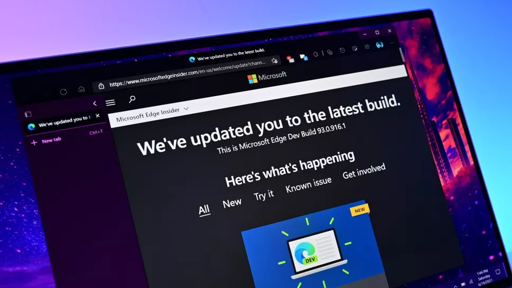
If you want to open Edge without actually wanting to open it, just accidentally click on one of the advertisements in the main menu or any info area widget. Those ignore the default browser and always open Edge.
My new work computer on both teams and outlook just open edge with any links too ignoring my default browser preference. My last one obeyed like a good computer.
There’s an edge redirector app you can get which redieects edge:// links to your default browser
You can change this in settings.
There are links that use a specific “edge” link type that you can’t assign to other browsers without admin access. So if it’s a work computer you’re kinda boned
You can definitely change Teams to use the default browser and not edge without admin access.
I’m pretty sure you can do the same with Outlook. Other links such as the start search menu sure you can’t change them.
one of the advertisements in the main menu or any info area widget
Okay, my biggest issue right with that has nothing to do with Edge.
deleted by creator
Microslop promising to improve windows 11 and give users agency back.
5 minutes later…

Have sex with me now?
( ) Yes
( ) Remind me in 3 days

The OS should get out of my way as much as possible.
Just like government. This capitalist, privacy nightmare timeline sucks.
I wonder what the solution to a capitalist privacy nightmare is… /s
Shareholder value!
Guns
I was gonna say government (legislation with teeth), but yeah sorta
I prefer Firefox, so I was using that as default browser. Windows asked me every fucking time I started my laptop if I wanted to use edge as default. Sometimes it just went ahead and made the change anyway. Windows was consuming loads of my download data, fuck knows what for. Then the copilot stuff. Finally installed mint and feel like I got my laptop back.
Windows was consuming loads of my download data, fuck knows what for.
Background updates of all the minor services running. I only had 360kbit/s for a while two years ago and windows could take a few hours until it was finished. You usually don’t notice it but I literally couldn’t use the internet until windows decided it was done.
I only had 360kbit/s for a while
they still sell dsl that slow here… and of course the telephone company charges those people even more than they do in town for 20-60mbit dsl or 100-1000mbit fiber.
When using Sunshine/Moonlight to stream games to our Apple TV, you can guarantee that if it begins to stutter it’s because Windows is downloading something in the background.
Welcome to the Linux family. 🤌🫂
Thanks, feels good 👍
Once I went Linux I loved computing again. I was getting angry at my PC every time I used it before due to backward ass idiot microslop decisions.
Was there no registry key that you could modify to stop that behaviour?
I’ve been down that road.
- It’s experimental
- It’s opt-in
- Opt out once when prompted
- Turn off once in Settings
- Turn off once in registry <-- we are here
- Turn off three places in registry
- Turn off every boot in registry
- Install 3rd party app to disable
- Install 3rd party OS to disable
Install 3rd party OS to disable
That’s the first step
And repeat all this horseshit for 50 other things that should be a simple toggle or that way by default.
My only regret is waiting so long to switch to linux. It’s like leaving an abusive spouse for that sweet young thing you’d been crushing on.
lol thanks OK. Appreciate the “we are here” touch, I get it now …
Yeah mean, yeah, probably. But I felt like they’d find a way round it in a month or so, or find something new to aggravate me with. It was getting like whack a mole.
There always is
Mint is great! I use Debian personally, but I really like Linux Mint and Cinnamon desktop. I think it’s a great fit for a lot of people who just want normal computer experience. Also there’s a misconception that Linux Mint is only for beginners, and while a lot of people migrate to some other distro eventually, staying with Mint is fine even if you want to learn Linux more deeply at some point.
why stop at edge, open every single program at start up and also fill the screen with pop up ads while you are at it
and also fill the screen with pop up ads while you are at it
Like this!
Idiocracy movie was so correct about our future…
Even the president in that movie is gun crazy, and its literally Trump and his advisors.
Nah man. The president in Idiocracy listened to smart people about how to help his citizens. He cared about them and their ability go to the thunder dome for entertainment.
Thats actually true. There wasnt any military industrial complex with billions to earn from his decisions. In a way, that movie is sticking to the public school version of what our leaders are.
Back in maybe 2012-ish my friend built a new pc with some excessive amount of ram for the time. He had a small enough amount of stuff installed on it that he was able to just load the entire fs into ram, and just load anything off of it effectively instantly.
I honestly might switch to Linux. I know people say that a lot, but gaming has been the only thing keeping me on Windows.
But I’ve also come to realize I just don’t have that much free time to game any more. Most of my computer use is putting YouTube on in the background or web browsing. I still occasionally game, but Linux support keeps improving and even if I only pick Linux supported games… I still won’t have enough time to play them all.
Gaming works great on Linux now and often better. The only scenarios I can think of where things are majorly behind are competitive games with anti cheat that doesn’t work on Linux and anything requiring peripherals with custom software, for example SIM racing. This means that the vast majority of games work great!
Sim racing works great for me. Anything from Moza, Logitech, and even my PXN wheel “just worked” out of the box on cachyOS. Bazzite is now getting wheel support. I did have to add USB descriptors for udev rules on my simmsonn pedals, and also learn to always disable steam input and use glorious eggroll proton. JacKeTus did a fantastic job with the ffb driver and I see him on matrix ALL THE TIME helping newbies and getting stuff working.
I game often, and 100% on Linux. Unless you’re doing competitive multiplayer games with kernel level anti-cheat (read: rootkit malware), games run perfectly fine.
Good news!
Apparently DeNovo’s been hacked!
P.S. I’m shit at games… so I don’t know if this actually really matters 😝
The Denuvo workaround only runs on Windows and creates the mother of all security holes.
Yeah… I finished up the Tom’s article. Nope, I lied… I just gave up on reading it 😌
It just seems like something that could be encapsulated, no? I guess since they call it a hypervisor bypass it sits below the virtualization layer… which is essentially Greek to me. About 1 million years ago, I tried to get solid Works to run in a Windows VM on Lennox and it wouldn’t work. Best I could tell they were using device names that the virtual machine substituted for real hardware… I tried to recompile it and change the names, but I gave up because I didn’t care that much. Since I was using Solidworks pretty much all the time a dedicated machine wasn’t a big deal… as hard as most gamers game, that seems like the route I would go if it were me.
A deadhead gaming box more-or-less isolated… obviously it’s not exactly gaming on Linux, but if you’re playing a game on a windows computer from your Linux desktop… I’d argue that it’s the next best thing.
There are two exceptions to this still, STALKER Gamma doesn’t work on Linux still and SKSEx64 doesn’t work either. Also modding Baldurs gate 3 through Nexus is fucky.
I switched to Linux a year or two ago. Pretty much every game I’ve played has worked fine. (Elden ring, guild wars 2, nioh2, pillars of eternity…)
Even non-steam stuff was basically click and go with Heroic launcher
Flash a distro onto a usb and boot from that to test drive it and ensure your hardware is compatible - zero risk.
I’ll be that guy, use bazzite. Unless your doing advanced shit or VR it’s basically everything you need in a simple package. Shit I didn’t even have to install drivers for my… well everything.
Only annoying thing I’m finding is my Firefox audio goes wonky sometimes while using the built in audio booster (FF extensions that boost audio were even worse) but rebooting Firefox fixes it.
As long as you don’t jump on AAA title games on launch day, you’ll be fine gaming on Linux.
That, or if you are a fortnite, LoL addict… Those don’t work for reasons totally up to the devs.
I recommend installing Ventoy on a USB stick, then putting some ISOs on there of various distros to try. Like CachyOS, Bazzite, or perhaps Kubuntu.
You can boot into them straight from the Ventoy USB stick without having to format the USB between new tests.
And if you end up liking one over the others you can install straight from the stick.
You can do it, I believe in you random internet stranger!
You can test most Linux distros using a “live” image on a thumb drive. If you put Ventoy on a drive, you can try as many ISOs as you can fit on the drive.
Bazzite or Fedora are both really good places to start.
FYI, Bazzite may have issues with Ventoy. It is recommended to use the Fedora Media Writer. I learned this a couple months ago.
Come on in, the water is great!
Your scenario sounds like mine. Don’t game much anymore and definitely don’t play triple A crap that requires kernel.level anti cheat. Been on bazzite for about 6 mos and everything has been great. So much better than Windows.
I’ve been gaming on Linux for over ten years now: It has gotten to the point where the only major hurdle is kernel-level anti-cheat. Which does work in Linux, but the developer has to enable it to work in Linux, and most don’t. This is only a factor in competitive multiplayer games. I’m not into those so basically I haven’t noticed, I want to run a game, it runs.
I don’t consider myself to be an advanced PC user, but even I was able to get Arch Linux to run with some googling and tinkering as my first dive into Linux. I really think you should make the switch if you don’t have any work restrictions. I dualboot still, just in case, but I can’t remember the last time I needed to use Windows.
Like you and the others say, if you have limited time gaming or don’t play AAA on launch day, that’s just one more reason not to use Windows! Good luck!
Doesn’t “consider [themselves] to be an advanced PC user…”
Picks Arch as their first Linux distro.
Found Linus Sebastian.
I only did it to try to impress people online lol.
Everything is like a Hodge Podge of fixes just to make it work, so if anyone asks me about the inner workings of everything, I wouldn’t be able to answer like 75% of it. I’m still learning.
Nah, he would have removed his DE.
Lol that loser can’t even install popos right
I just gonna go live in the woods and take up bird watching or something.
Zorin OS is a good one if you want a nice UI transition from Windows or Mac.
Pop_OS has been a piece of cake to use. Switched last year, never looking back.
I’ve seen this episode before…something something IE something something Netscape
in 98 they were taken to court because at one point you couldn’t even uninstall IE from your PC since, if I remember correctly, It was so tied into the file explorer it would break your system. they also made it difficult to download alternatives like Netscape.
I remember my Dad had a thing for “eMachines” PCs because A. they were cheap and B. most of the time they came preinstalled with Netscape as opposed to IE and he liked Netscape a lot better. Problem with this though is I liked to play X-Wing vs Tie Fighter and Jedi Knight online and the easiest way to do so was via Microsofts Internet Gaming Zone which ONLY worked on IE. and downloading/installing IE in the late 90s on a dial up connection took forever. and THEN once you did install it good luck uninstalling it.
Firefox was born fron Netscape.
Remembered using it in college and it was good. Mostly now use Firefox.
Ironically edge is installed on our Arch box as the Boss needs it for work.
I use https://www.waterfox.com/ instead. It’s Firefox with privacy.
in 98 they were taken to court
A wise (but evil) business decision to try again today.
Bahahaha I grew up with an emachine once we upgraded from our 386, then 486…
The emachine was the worst computer I’ve ever had. I preferred our Compaq Portable. I didn’t know it at the time but emachines were just Gateway’s bottom-tier garbputers. Trying to play anything on it was a nightmare. Even MIDI files sounded like shit compared to my friend’s 1GHz HP. The Rage II integrated graphics played Diablo II at 10FPS.
Horrible nightmare machine full of poop and sadness.
I wish they kept it. I’d love to have it on display at my house now.
yeah they were horrible, could barely run anything. I always remember the sticker on the front of it “you’ll never have to upgrade again!”
My dad would get deals on them because he would pay for like a years worth of internet service up front so we’d either get the emachines pc for dirt cheap or practically free. so depending on the deal that was being run we’d end up switching ISPs like every year. MSN, AOL, Prodigy, etc.
i’ve still got an ‘emachines’ here. granted, nothing inside is original anymore, except the optical with the curved silver bezel. has an am3 board in it now (originally a barton core on nvidia chipset). i keep it around because it has ide ports… and yes, i do use those. had to dig it out twice in the last month.
Oh, so they’re on board with convincing people to move to Linux. Good job!
sudo apt install edge-browserMake yourself at home!
I’m already at $HOME
Why are you at my home???
my $HOME is not your $HOME
Don’t worry, they’re at /$USER/$HOME
/{username}//home/{username}What is this path supposed to be?
/home/$(whoami)– Frost
Please use
$HOMEinstead of this. There are configurations that do not rely on the usual/home/$USERformat. The root user is a good example, having their$HOMEset to/root.
Well… I’ve just checked out, and aside from unofficial Edge flatpak, there are official Debian/Ubuntu and Fedora repositories, I just don’t understand why would anyone want to integrate spyware web browser into their system.
Some men just want to see the world burn. 🔥
I have an idea. Linux should start automatically everytime you boot you PC.
IDK that seems pretty invasive
Perhaps just GRUB and waiting for my input one extra time to confirm I actually want to use my PC at that time
I just have one kernel and one Distro with secure boot. So I directly use UEFI.
“Funny” news that bring me back to the last time I decided to switch to Linux.
I updated windows 10 and when my PC booted I got a full screen to setup edge. I wasn’t able to find any way to quit the screen. So I completed the set up and went to install Linux.
It’s crazy how they believe they own the PC of their customers… I mean, it’s in the name… Personal…
My Computer --> Computer --> This PC
Microsoft does not consider this your PC anymore.
when i first switched to linux, i kinda took a little bounce. had some little annoyances in nobara and went back to win10. but when i saw my school logo in the start menu and it said somewhere that my school is the administrator on that pc, i went right back. that was creepy af, all i had done was sign in on ms office.
That’s not Microsoft, that’s just how managed computers work lol. Which means you likely stole it or bought it stolen.
stole it? i bought every piece of it new a long time ago and assembled it myself, and i had a legitimate win8 licence that i upgraded to 10, for which i downloaded the installer directly from microsoft
Why would my browser Downloader need to start again after I download other browsers?
Even non-techies know how and want to install a different browser, how many decades more will they try this pressure fueling of their shitty browser?
In fear of playing devils advocate a little bit:
Edge is not a shitty browser. Ad-infested, controlling, overwhelming, disrespectful, annoying yes. But not shitty.
It’s chromium-based so it’s quite fast and secure (unlike Internet Explorer that everyone loved back in the day) and it integrates well with the overall OS.
I wouldn’t use Edge, but it’s a decent default if you’re okay accepting Windows antics or too young to remember for how long Microsoft has been desperately trying to play catch up and failing.
It’s an opinion, don’t kill me. 😶🌫️
Edit: unrelated to the topic, but I’d like to thank everyone for not downvoting me for wrong think like what would happen on that other platform. Why is this community so nice? 😭
I’d argue that those behaviours are what make the browser shitty.
That’s also a fair point, in hindsight. I associate shitty to being insecure, slow, and borderline unusable. I have a middle of the road view on the privacy aspect because Chrome exists, it doesn’t care about your privacy but I think you’ll be hard pressed to call it shitty.
That said, I wouldn’t hold my breath and I wouldn’t be surprised if in a few months time Chrome comes with Gemini integrated by default. All your private data, straight to Google’s servers.
You’re very a tolerant person. I wish i could be that tolerant, but I don’t think I can and I guess I do pay the price quite often…
deleted by creator
I used it for a little bit years ago after it switched to a chromium engine. It was fine.
Edge quickly became my main browser. Its Tab Groups are borderline genius.
Firefox has tab groups, tab notes, tab categories, vertical tabs
Only thing is missing integration with teams and outlook.
It’s a shame Firefox’s tab groups are quite bad at what their supposed to do and their colour schemes are quite obnoxious.
I haven’t used edge. Could you tell me what I’m missing out on?
I don’t use edge either. I’m comparing it to chrome.
On Firefox, for some reason, the tab and tab text colours are as if you had high contrast theme on. They are horrible to look at.
There are also a bunch of small, but over all annoying, QoL features missing. For example when you have a tab open from a tab group and you click the tab group to minimise it, it doesn’t minimise the tab you have selected.
Just small things like that. It just feels unfinished.
I do like vertical tabs too… But Firefox has a plugin for that so I’ve been using Firefox the last year or so and rarely have an issue.
Firefox has vertical tabs natively now, actually.
Oh nice, I guess I didn’t notice. I’ll check that out, it may have switched automatically with an update.
Yeah it was relatively recently that they added them. I wanna say within the last 6 months, but I could be wrong. There’s also tab grouping, now, I think.
Until they started to generate slopilot labels for them. Because nothing is safe from the slop.
Might be. I have a cleanup tool that disabled stuff like that OS wide. I kept the Edge shopping assistant, because it did find me a few sweet deals early on.
Vivaldi also has tab groups.
Firefox has tab groups too. I don’t know if the implementation is any different since I’ve never used them in either browser.
Yeah, their quite bad tbh. And the colour options are horrendous.
cant do that on a work computer, its either edge or chrome.
Between this and Lemmy, I’m ready for a switch to Linux now even though I don’t know how it works.
You ask people online and get 78 different answers, then get caught up in decision paralysis and stick with windows.
I went down this rabbit hole recently: irked about a broken Windows update, I picked up on people’s advice to try Ubuntu. To say I was disappointed doesn’t really do it justice—I was mostly just surprised that it looked and behaved exactly like the Ubuntu I had used in college in 2006.
I’m really disheartened to say that after 20 years, it’s still the same sluggish, dated, janky UI that I remembered from way back and honestly it just misses basic functionality. As a random example, there’s no way to adequately control DPI settings for two monitors and messing around with screen resolution settings breaks the entire Gnome UI to the extent that you need to reboot. Some folks here on Lemmy were saying I should install KDE or something else, but I doubted it would be a miracle fix and didn’t bother going that route.
I totally understand that it’s built by volunteers and I think that’s absolutely awesome! Personally, I just don’t think it’s for your average Joe.
Went with Kubuntu as I prefer KDE, and it’s not been good on a multi monitor setup (at least with my hardware).
While I did make it further there than on some of the other distros I tried, it was still a no go.
Think I’m going to pave it and give OpenSuse another shot, just have to get some other bits sorted out.
Unfortunately, Canonical has kinda lost the plot lately - don’t take that as “all there is” that Linux offers.
That being said, KDE is a world apart from Gnome for the features it offers, it’s by fer my preferred DE, especially if you get a distro that offers plasma 6 and Wayland. I’ve been running Fedora with KDE for the last ~6 months and have been more than happy with the experience.
Seems I really struck a nerve. Again, it’s not my intention to put linux in a bad light. I’m just sharing my not-so -great-experience that returned me to Windows.
FWIW, the broken update was fixed by reinstalling Windows, which was done by the time I finished cooking dinner with literally everything left in place. I don’t really understand the hate on Windows.
Are you reading the hate on Windows?
Microsoft is a multi-billion dollar international mega-corp, and their software is meant for enterprise use as a tool to get a job done–a means to an end. All of its other uses are distantly secondary to that.
In that context, the tool becoming progressively less reliable, fast, and predictable makes it ever less fit for purpose. Sure, you used that time for something else productive, but when you need your computer for something important right now, it failing to work because its maker broke it when you weren’t looking is a lot to take. Dollars and jobs can be lost because of Microsoft’s cavalier attitude toward quality.
Contrast that with Linux, a free program made by volunteers in their spare time. Its own updates can cause problems like Windows, but they are ever less common, while the opposite is true for Windows. Furthermore, if I have important upcoming use for my PC, I can delay or ignore updates as long as I want, even forever. The owner gets to control the computer’s use, because they’re the owner, a fact Microsoft does not respect at all, and seems to be taking measures to change.
People do not like to be told what to do, nor when or how to do it. People that know how computers work and use them heavily understand how to maintain their computer, and those people are heavily represented here. They are getting their skilled PC management replaced by forced, shoddy, automation of that task and it causes them unnecessary problems, often at inopportune times.
That’s why Windows gets hate here–Microsoft keeps kicking them in the balls and they hate that.
I’ve read and understood those concerns, hence my comments pointing out the contrast in my experience. In my case, Ubuntu was unable to accomplish what I needed it for and I returned to using Windows. I know this is a controversial position, because nobody wants to be supportive of a for-profit corporation, including me.
However, I try to separate criticisms of the corporation from my day to day needs and I feel misled by the community to go down a route to try switching to something that, in my very sincere opinion, was objectively a bad choice. I understand that many may disagree with me, and perhaps my specific choices were not the right ones, but I’d have wanted to hear some discourse and balance in opinions before I had wasted my time.
I honestly cannot relate to any of the points you’ve raised with Windows. Perhaps my experience here in Europe is somehow different? In any case, I hope somebody finds this comment to be more constructive input than an upteenth comment parroting that Windows is bad and everybody should just switch to Linux.
deleted by creator
You’re absolutely right about how the grievances against the company should be factored in. You’ve formulated it very well and I entirely agree with you.
To be clear, what puzzles me about this community is the fervor you mention about Linux. In my own experience, and while giving Ubuntu the benefit of the doubt out of frustration with Windows, I personally found it to be exceedingly disappointing. I don’t think it’s fair to say that I’m among the lucky ones to have few issues with Windows, because distilling my experience with Linux, I might draw sweeping generalizations about Linux as a whole.
While I, too, encourage everybody to try Linux, I would caution them to set their expectations accordingly. In my opinion and experience, Linux is tailored towards an audience of users with more time to troubleshoot problems and a willingness to accept a lower quality bar (for a lack of better words) in exchange for distancing themselves from the corporation behind it.
Don’t worry, none of us did until we gave it a go
Do it! Just choose the most normie distro you can find (probably something like Mint or Ubuntu) and free yourself!
To give some balance from my experience, I don’t recommend Ubuntu.
I’m not interested in getting into a distro war. I think we should encourage people to get into the ecosystem via whatever user-friendly means possible. Once they’re in, then they’ll be a lot more likely to try out another distro.
Honestly the popular linux distros are pretty polished / user friendly these days. You’ll run into little issues, and you need to be at least a little bit curious / tech savvy to figure them out, but it’s nothing a little googling can’t solve typically.
I’m here for any questions you may have , just pm me! I enjoy helping and I can usually break things down into easy to understand bits.
Havent touched windows at all in a year except for work. And I did try Linux back in the early 00s but I wasnt ready then (wanted to game). Its come sooooo far.
Literally the only things I can’t do: play pubg, and battlefield games. Both made by shit devs we should never support anyway. Oh, and use my Keith McMillan 12 step foot synth program on it. I have a spare junky win 10 laptop for that.
Has there been a fix for 240hz 32:9 monitors for their full refresh rate? That’s what’s stopping me.
I haven’t heard of that issue but my guess is if you had it it was related to a specific distro or am, not the Linux kernel, but I might be wrong
It’s fairly inherent to Linux from what I’m hearing and requires a lengthy reconfiguration of my monitors EDID. It’ll allow you to run at 120hz in 1440p, or 240hz in 1080 resolution. Someone created a custom edid for a different model G9 but I’m not sure it works on a G93SD
Hi friend, it’s surprisingly easy to jump into. Zorin OS is a great place to start, or bazzite
Don’t be too worried about how it works, none of it is permanent, you can always reinstall windows if things go tits-up
At this day and age it works pretty much as you expect it to work. I’d recommend something like ubuntu (or kubuntu if you want it to look and feel more like windows). Something that is stable and not on the bleeding edge and mainstream so you can easily Google for help if you need it. Apart from that I think you can use a gui for pretty much anything you might need.
Little side note: the new long term support version of Ubuntu will be released this month. I’d wait for that so you have a pretty up to date version. If you need help or advice you can DM me if you like.
Thabk you, sir. I’ll fiddle around as I ready myself. I probably need to research a bit more.
Maybe you could try the system in live mode to get a feel. You can simply make an install USB stick and boot from that and just select the live install. This will start the system directly form the USB stick without installing anything and then you can just play around with it and get a feel. Just be aware that all changes are temporary and are not saved to the stick. Most major distributions have such a functionality.
Just do it and ask questions later.
If you want something easy to install that has active updates I recommend Bazzite I’ve been using it for over 4 years now.
similar to mac and windows
Mint guy here, since 6 months ago, best choice I have done. If you make some research, in few time you realiese you do not need Microsoft to live in the majority of the cases.